
Gas, Propane or Electric Tankless in Midlothian Homes
The fuel you already have in the house usually decides the tankless unit you'll end up with. Here's how natural gas, propane and electric tankless compare in a Midlothian home, with the numbers worked out for a winter morning, and when a heat pump tank is the better electric choice.
The short version
| Natural gas | Propane | Electric | |
|---|---|---|---|
| Best for | Most Midlothian homes with gas service | Homes past the end of the gas mains | Smaller households, or one far bathroom |
| Whole-house flow in winter | Strong | Strong, if the tank and regulator keep up | Limited |
| Needs a vent | Yes | Yes | No |
| Big question | Gas line and meter size | Supply from the tank | Spare capacity in the electrical panel |
| Works in a power outage | No, it needs power for controls | No, same reason | No |
Natural gas: the usual choice
If your Midlothian house has gas, a gas tankless unit is usually the strongest whole-house option. Your gas comes from either Columbia Gas of Virginia or Richmond Gas Works, the City of Richmond's gas utility, which serves portions of Chesterfield County. Check your bill. Either way, the contractor needs to confirm that the pipe from the meter and the meter itself can carry the new load along with your furnace and other gas appliances.
If Columbia Gas is your company, its 2026 WarmWise program offers up to $250 for a high-efficiency gas water heater, with tankless units needing a UEF of 0.92 or better, in an existing home with primary natural gas heating. Rebate details and deadlines.
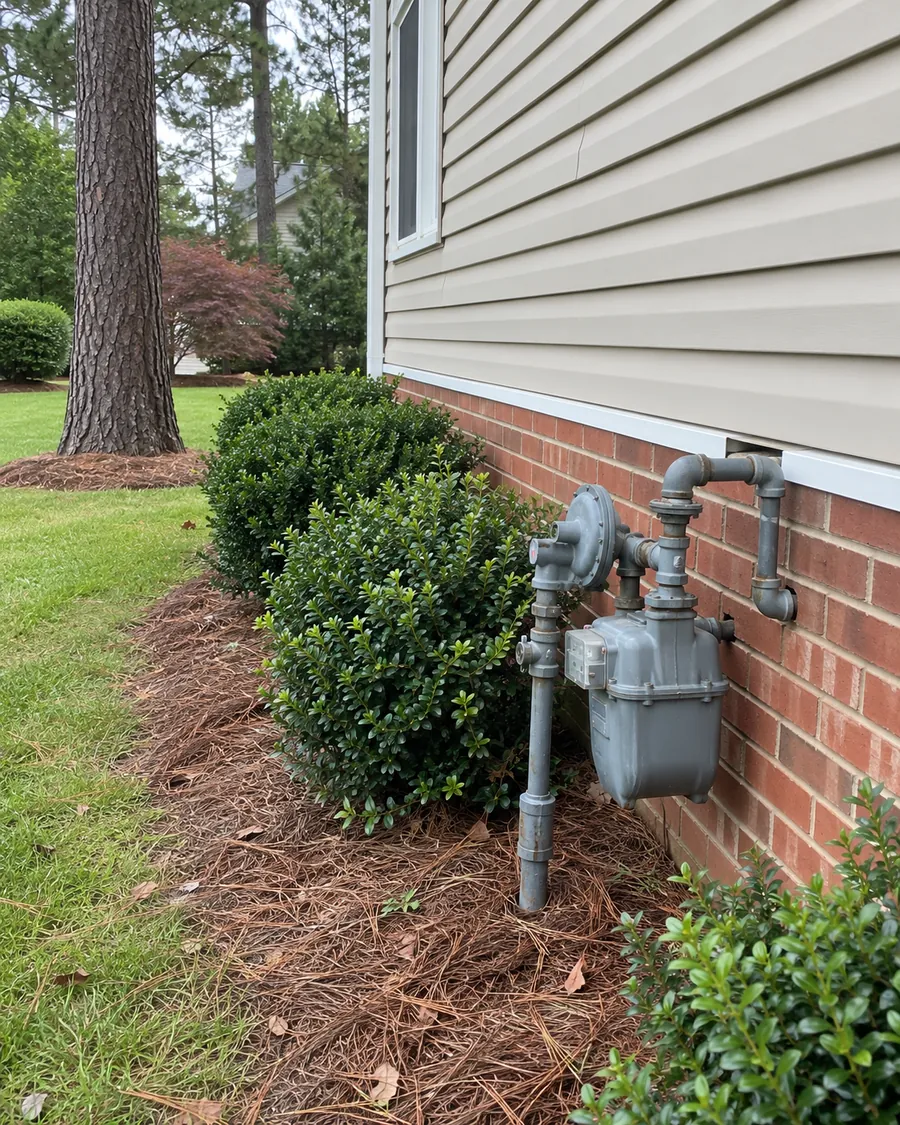
Worked numbers: gas on a winter morning
Heating water takes about 500 BTU per hour for each gallon per minute and each degree of temperature rise. That number comes from a gallon of water weighing about 8.3 pounds and 60 minutes in an hour. With the Department of Energy's suggested 50°F incoming water and a 120°F target, the rise is 70 degrees.
- A unit rated at 199,000 BTU per hour, at an assumed 95% efficiency, puts about 189,000 BTU an hour into the water.
- 189,000 ÷ (500 × 70) works out to about 5.4 gallons a minute at a 70-degree rise.
- That covers two 2.5-gallon-per-minute showers with a little to spare, but not two showers plus a dishwasher plus a kitchen faucet.
Real units vary, so ask for the model's rated flow at your temperature rise. These figures are a way to check a quote, not a substitute for the manufacturer's chart.
Propane, where the gas mains stop
Some homes farther out in western Chesterfield have no natural gas line and run a propane tank instead. Propane tankless units work like natural gas units, but the unit has to be the propane version, or converted with the manufacturer's own kit where the manual allows it.
- Call your propane supplier before the job. The tank size, the regulator and the line all have to deliver a high-demand appliance's full load.
- Smaller tanks can have trouble keeping up in very cold weather, when the furnace and the water heater are both running hard.
- If you lease the tank, the supplier may have to do or approve the work on its side of the regulator.
Electric tankless: check the panel first
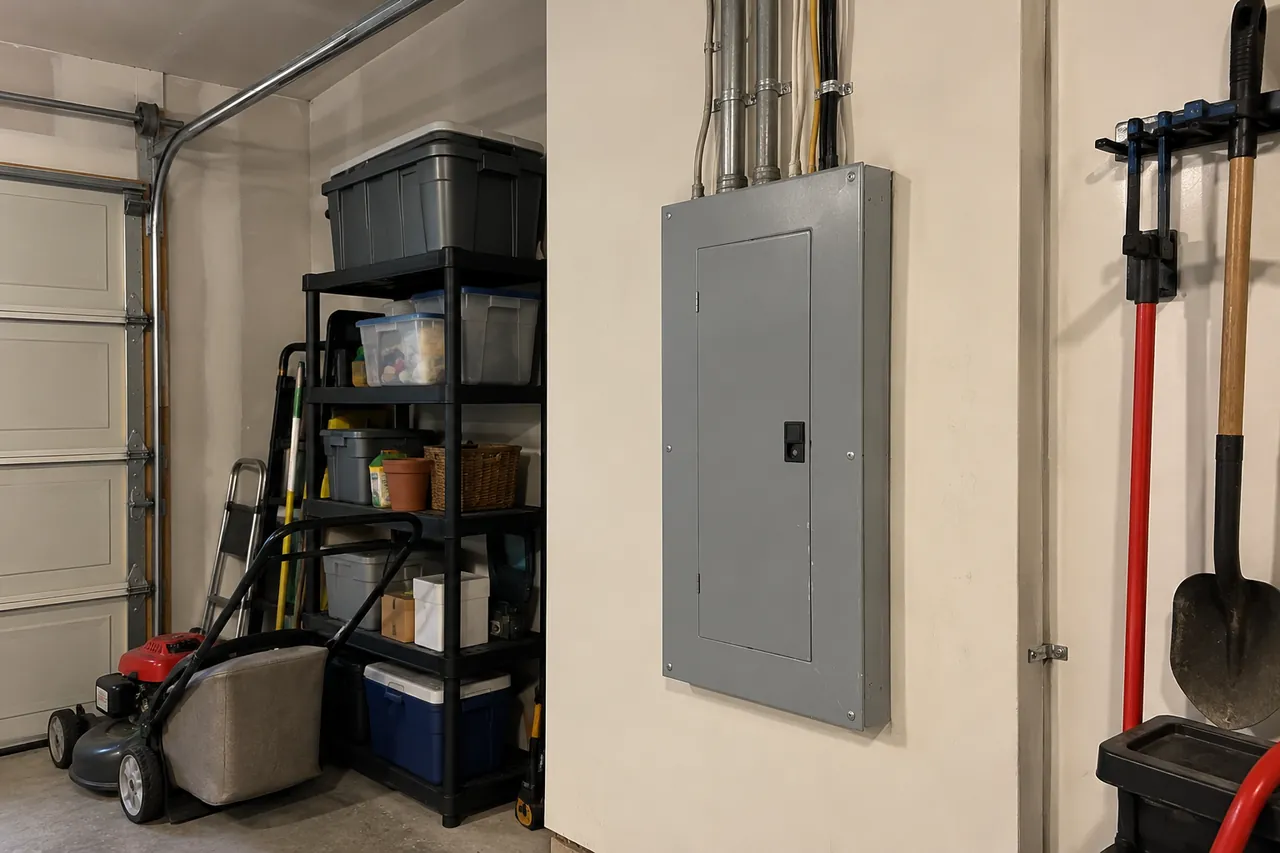
Electric tankless units need no gas line and no vent, which makes them easy to place. The catch is how much power they draw. Amps are the unit's wattage divided by the voltage, so at 240 volts:
| Unit size | Draw at full output | Flow at a 70-degree rise | Flow at a 50-degree rise |
|---|---|---|---|
| 18 kW | 75 amps | about 1.8 gal/min | about 2.5 gal/min |
| 27 kW | about 113 amps | about 2.6 gal/min | about 3.7 gal/min |
| 36 kW | 150 amps | about 3.5 gal/min | about 4.9 gal/min |
Flow figures assume all the electricity becomes heat: kilowatts × 3,412 BTU, divided by 500 × the temperature rise. A 36-kilowatt unit alone would use 150 amps of a 200-amp service at full output, so many homes need a service or panel upgrade before a whole-house electric unit makes sense. Have a licensed electrician run a load calculation first. The unit's manual lists the exact breakers and wire sizes it needs.
The table shows the other limit too. In winter, even a large electric unit struggles to run two showers at once.
Point-of-use: a small electric unit for one spot
A small point-of-use electric unit serves a single sink, a bathroom over the garage, or a basement addition far from the main heater. It draws far less than a whole-house unit and can sometimes run on a single circuit. In a long Midlothian house with a gas tank or tankless unit at one end, it can cut the wait for hot water at the other.
The electric alternative: a heat pump tank
If you don't have gas and the panel can't spare 100-plus amps, a heat pump water heater may suit better than electric tankless. It stores hot water in a tank but heats it by pulling heat from the surrounding air. The Department of Energy says heat pump water heaters can be two to three times more efficient than conventional electric-resistance water heaters. They need room around the tank, and a garage or an unfinished basement often works. Ask your contractor to price both.
Fuel questions
Can I switch from an electric tank to gas tankless?
If gas is available at the street or already in the house, yes, but it's a bigger job: a gas line to the unit, venting, and possibly a meter. If you're with Columbia Gas, confirm the rebate rules before you buy, since they require primary natural gas heating.
Is propane tankless more expensive to run than natural gas?
It depends on what you pay for each fuel. Compare your propane price with your gas company's rates using the unit's rated input, or ask your supplier to run the numbers.
Can a whole-house electric tankless unit work in Midlothian?
For a small household with modest hot water use and enough electrical capacity, it can. Bigger households that run more than one shower at a time in winter are usually better served by gas, a heat pump tank or a regular tank.
Will a gas tankless unit work when the power goes out?
No. Gas units need electricity for their controls, fans and ignition. If that matters to you, ask about a backup power option sized for the unit.
Sources
- U.S. Department of Energy, Sizing a New Water Heater (50°F incoming water, fixture flow examples)
- U.S. Department of Energy, Heat Pump Water Heaters
- Columbia Gas of Virginia, water heater rebates (checked October 2026)
- City of Richmond, Richmond gas utility overview (service area)
- EPA Methane Challenge fact sheet, Columbia Gas of Virginia (service area)
Talk to a tankless contractor in Midlothian
Call or send a short request, and it goes to one independent local contractor. The referral costs you nothing.