
Propane Tankless Water Heaters in Midlothian, VA
Natural gas mains don't run through every Midlothian neighborhood. In Hallsley, for example, the houses were built with a 500-gallon propane tank buried in the yard and a tankless water heater inside, and a propane company comes by to refill the tank. Here's how that setup works, what changes when the water heater needs repair or replacing, and what goes into adding a buried or above-ground tank where your HOA allows one.
Who does what
Two different companies look after a propane tankless setup. The propane supplier owns or services the tank, the regulators and the delivery, and usually sets new tanks. A plumbing or gas contractor handles the water heater, its venting and the gas piping inside the house. MidlothianTankless.com is a referral service for the water heater side: your call or request goes to one independent local contractor. This site doesn't sell propane or install tanks.
How a buried propane tank works
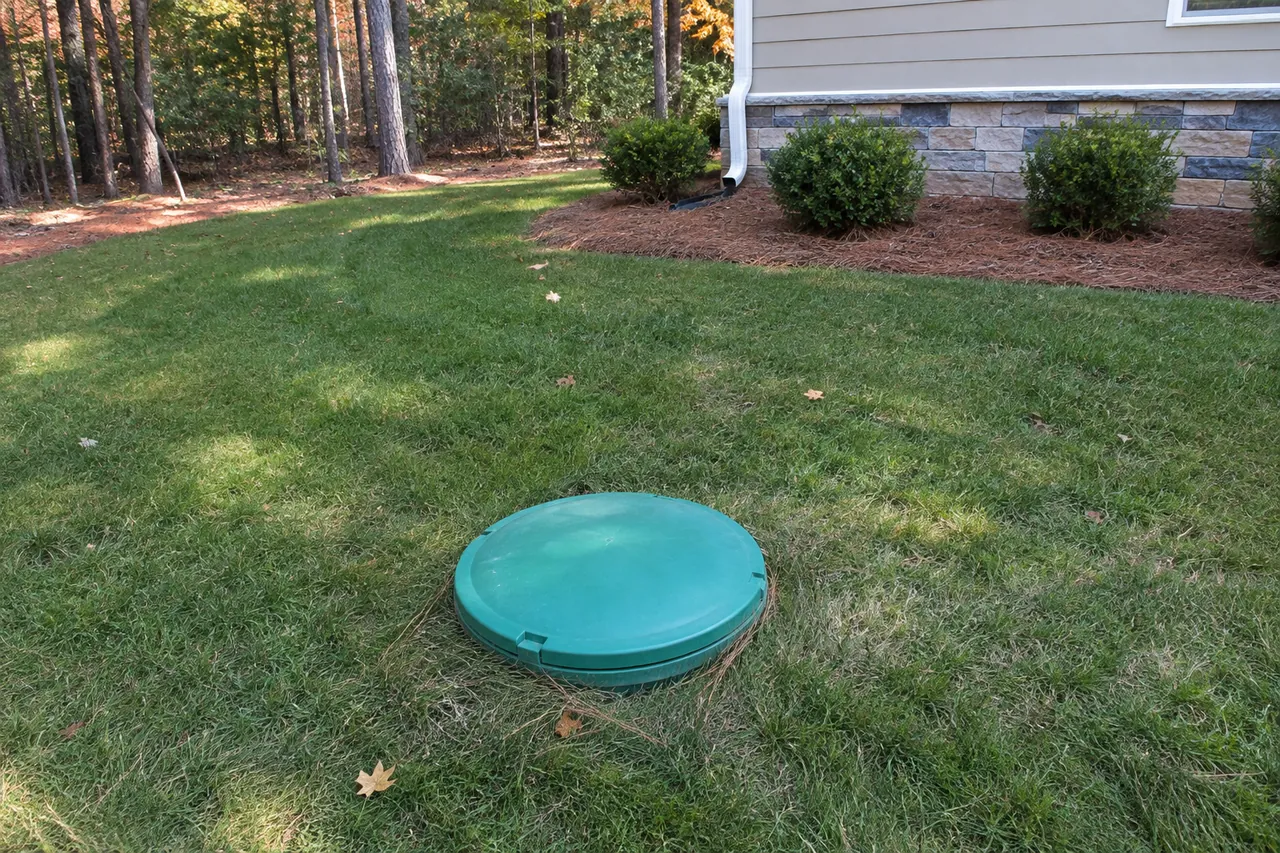
From the yard, all you see of a buried tank is a small lid, usually a dome sitting a few inches above the grass. Under it are the fittings the driver uses, including the fill valve and the gauge. The driver opens the lid, connects the hose from the truck and fills the tank through it. A buried line carries the gas to the house, and regulators bring its pressure down for the appliances.
- How full it gets. A propane tank is never filled to the top. A 500-gallon tank holds about 400 gallons of propane, which leaves room for the liquid to expand on a hot day.
- Reading the gauge. The gauge under the lid shows a percentage of the tank, not gallons. At 30%, a 500-gallon tank has roughly 150 gallons left.
- Keeping it from rusting. A buried steel tank is normally coated and protected by cathodic protection: an anode of magnesium or zinc, wired to the tank, corrodes so the tank's steel doesn't. The national propane code has required it on underground tanks installed since 2011, with periodic tests. Ask your supplier whether yours has it and when it was last tested.
- Everything shares one tank. The tankless unit draws from the same tank as anything else on propane in the house, such as a furnace, range, gas fireplace or standby generator.
Deliveries: automatic or when you call
Propane companies generally offer two ways to keep the tank filled:
- Automatic delivery. The company tracks your use, or reads a monitor on the tank, and sends the truck before you run low.
- Will-call. You watch the gauge and call for a fill.
Running the tank dry costs more than an inconvenient cold shower. The National Fuel Gas Code (NFPA 54) calls for the piping to be checked for leaks when gas is restored after an interruption, so after a run-out, expect a leak check when the gas is turned back on, before the appliances are relit, not just a delivery.
Worked numbers: what hot water burns
A gallon of propane holds about 91,500 BTU, per the U.S. Energy Information Administration. Heating water takes about 8.3 BTU per gallon for each degree, and the Department of Energy suggests planning on 50°F water coming in, so a 120°F shower needs a 70-degree rise.
| Example | The math | Propane |
|---|---|---|
| One 10-minute shower at 2.5 gal/min | 25 gal × 8.3 × 70 ≈ 14,500 BTU into the water, ÷ 0.95 for an assumed 95% efficiency, ÷ 91,500 | about 0.17 gallon, or about six showers per gallon |
| A 199,000 BTU/hr unit at full fire for an hour | 199,000 ÷ 91,500 | about 2.2 gallons |
| A full 500-gallon tank | about 400 gallons ÷ 0.17 | roughly 2,400 of those showers, if nothing else used propane |
Real use depends on your household and on everything else that shares the tank. Your supplier's delivery history shows what your house actually burns, and it's worth a look before you change water heaters.
Repairing or replacing a propane tankless unit
Most repairs and replacements look the same on propane as on natural gas. A few things are specific to propane:
- The replacement has to be a propane model. Either buy the propane (LP) version or have the unit converted with the manufacturer's own kit, where its manual allows a conversion. A natural gas unit must never run on propane unconverted.
- Bigger input, same supply? If the new unit has a higher BTU rating than the old one, the line from the second regulator and the regulator itself have to carry it along with everything else on propane. Your supplier can check its side.
- Rule out the supply first. Before replacing a unit that shuts off or won't light, check the tank gauge and ask whether anything changed at the tank or regulator.
- Permit. Chesterfield County treats a propane water heater swap like a natural gas one: it needs a permit, and its fee schedule lists a like-for-like gas appliance replacement, natural gas or propane, at $57. Chesterfield permit details.
Owned or leased tank
Ask whether you own your tank or lease it from the propane company. It decides who can fill it. Under Virginia Code § 18.2-494, only the tank's owner, or someone the owner authorizes in writing, may fill it.
- Leased tank: you buy propane from the company that owns the tank, whose name or mark is usually on it. That company may also have to do or approve any work on its side of the regulator.
- Owned tank: you can choose your supplier and compare prices.
- Emergencies: the law makes an exception in a qualifying emergency, such as a declared state of emergency, or severe weather that puts people or the house in danger for lack of propane heat. Then a residential customer with less than a 24-hour supply who has first asked the owner for a delivery may have another supplier fill the tank, if the owner can't deliver within 24 hours.
Adding a propane tank: buried or above ground
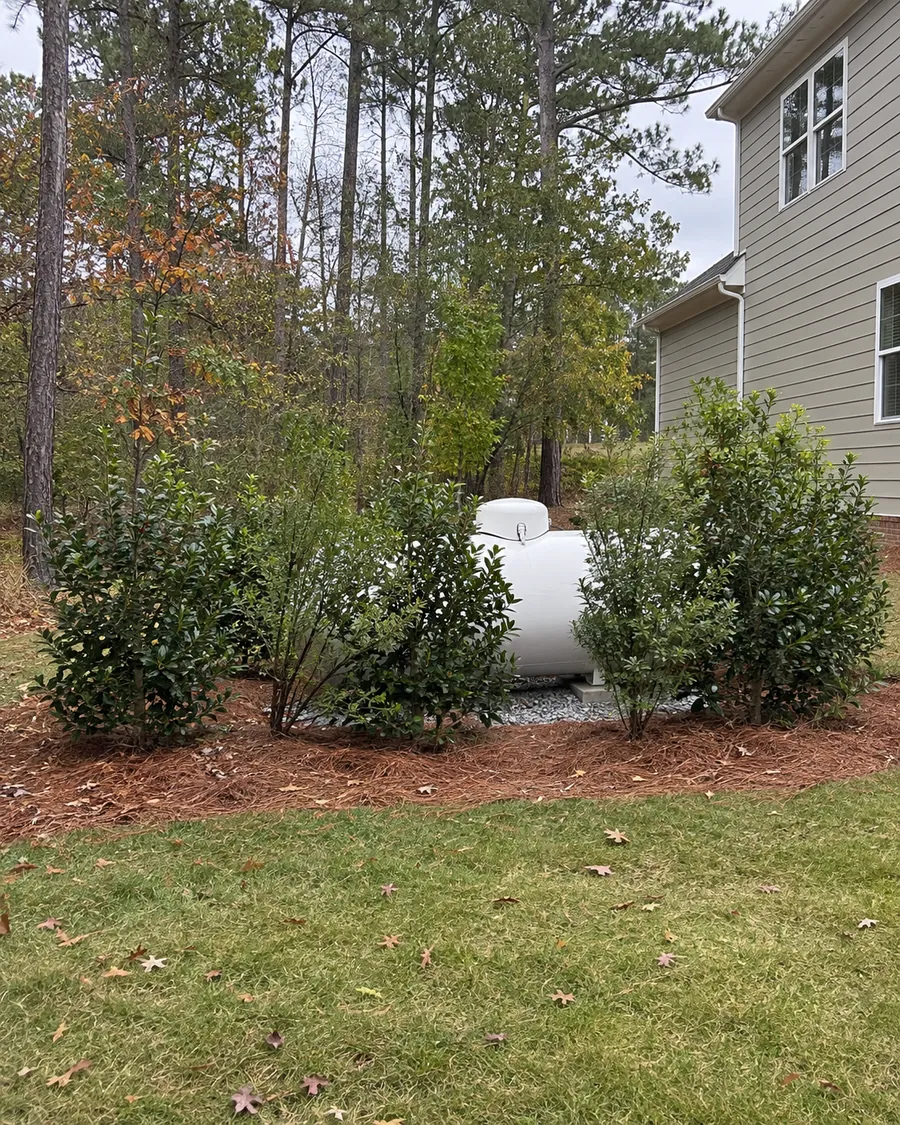
Some Midlothian homes have no gas at all and want a gas tankless unit. Others want to trade a visible tank for a buried one. Either way, the national propane safety code, NFPA 58, sets the basic rules, and your HOA may set more.
| Buried 500-gallon tank | Above-ground 500-gallon tank | |
|---|---|---|
| What you see | A lid a few inches above the ground | The whole tank |
| Distance from the house and property lines | At least 10 feet (underground tanks up to 2,000 gallons) | At least 10 feet (tanks of 125 to 500 gallons) |
| Installation | A hole dug for the tank, with at least 6 inches of cover, or 18 inches within 10 feet of where vehicles drive | Set on a firm, level base |
| Rust protection | Coating plus cathodic protection, tested periodically | Paint |
| Install cost | Usually higher, because of the digging | Usually lower |
The fill connection and relief valve on a tank that's filled in place also need to sit at least 10 feet from outdoor sources of ignition. On a narrow lot, the 10-foot distances from the house and the property line can decide where a tank fits before anything else does. Keep a buried tank out from under a driveway or any spot where cars and trucks will drive.
Steps to add a tank
- Ask your HOA first. Neighborhood covenants often cover visible equipment. Ask the architectural review committee whether a tank must be buried or screened, and get the approval in writing before you sign anything.
- Pick a propane supplier, and decide whether to lease or buy the tank. The supplier usually sets the tank and the regulators.
- Agree on the spot. It has to meet the distances above, and the delivery truck's hose has to reach it. Walk the yard with the supplier.
- Get the permit. Chesterfield's 2026-27 fee schedule lists a propane tank and/or line with gas piping to the appliances at $114, and a tank and/or line alone at $57, plus a 2% state levy.
- Call 811 before anyone digs. Virginia law requires a locate request before any digging. Virginia 811 is free. Utilities have until 7 a.m. on the third working day after the request to respond, and digging should wait until Virginia 811's Positive Response System shows that every utility has marked its lines or reported none. 811 marks public utility lines only. Private lines, like an existing propane line, a sprinkler system or a line to a detached garage, are the owner's to mark.
- Then the water heater work. The contractor runs the gas piping inside, installs and vents the tankless unit, and the county inspects the job.
Propane questions
Who do I call when there's no hot water?
Check the tank gauge first. If the tank is low or empty, call your propane supplier. If there's propane and other gas appliances work but the water heater doesn't, it's a water heater problem, and a tankless contractor is who you need. Common tankless problems.
Can another propane company fill my tank?
If you own the tank, yes. If you lease it, Virginia law lets only the owner, or someone the owner authorizes in writing, fill it, except in a qualifying emergency.
Is propane more expensive to run than natural gas?
It depends on what you pay per gallon and per therm. To compare, use about 91,500 BTU per gallon of propane and 100,000 BTU per therm of natural gas.
Does a buried propane tank need any upkeep?
The cathodic protection that keeps it from rusting needs periodic testing, and the lid should stay clear so the driver can reach the fill valve. Your supplier can tell you when the tank was last tested.
Will a propane tankless unit work in a power outage?
No. It needs electricity for its controls, fan and ignition, even with a full tank. If you have a propane generator on the same tank, ask whether it powers the water heater's circuit.
Related pages
Sources
- Virginia Code § 18.2-494, who may fill a propane container and § 18.2-493, definitions
- Virginia Code § 56-265.17, locate request before digging
- Virginia 811, excavators and property owners
- Chesterfield County residential fee schedule
- Propane Education & Research Council, tank placement under NFPA 58 (archived)
- Minnesota State Fire Marshal, LP-gas container distances from NFPA 58
- Superior Plus Propane, tank sizes and capacities, why tanks are never 100% full, reading the gauge and underground tanks
- N.C. Department of Agriculture, corrosion protection for underground propane tanks
- U.S. Energy Information Administration, BTU content of fuels
- U.S. Department of Energy, Sizing a New Water Heater
- Oil & Energy, NFPA 54 leak check after a service interruption
Propane tankless trouble in Midlothian?
Call or send a short request, and it goes to one independent local contractor. The referral costs you nothing.